

Product Overview
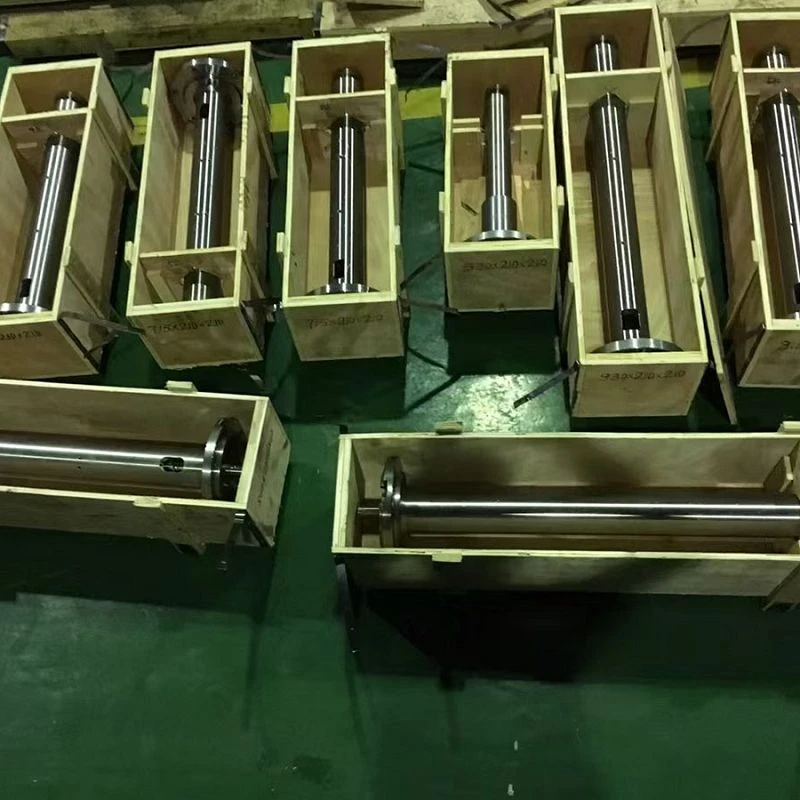
The plastic extruder screw is the primary functional component of extrusion machinery, responsible for conveying, compression, plasticization, and polymer melt homogenization. Operating under high torque, severe mechanical friction, and thermal stress, extruder screws dictate melt quality, output consistency, and energy efficiency.
Designed for plastic extrusion, compounding, and pelletizing lines, our extruder screws are engineered to match specific machine architectures and polymer processing requirements. Whether manufacturing replacement screws for existing extruders or custom geometries for new compounding formulations, production is governed by rigorous dimensional control, material matching, and wear-resistant processing.



Screw Types and Configurations
Extrusion processes require dedicated screw geometries matched to the rheological properties of the polymer and the mechanical design of the extruder.
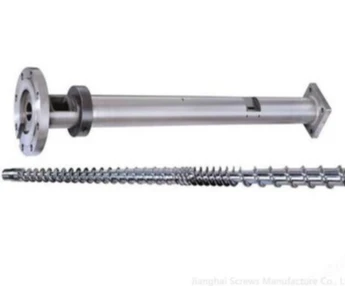
Single Extruder Screws
Custom-engineered barrier screws, mixing-section screws, and standard general-purpose metering screws for thermoplastic profile, sheet, pipe, and wire/cable extrusion.
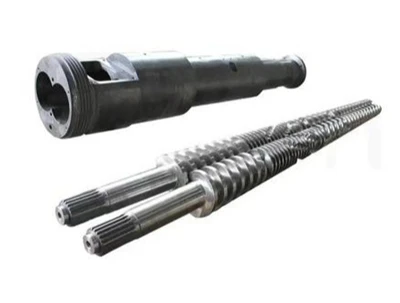
Twin-Screw Compounding Elements
Intermeshing co-rotating and counter-rotating modular screw elements, including conveying blocks, kneading blocks, and specialized mixing elements designed for twin-screw extruders.
Bimetallic and Hard-Faced Screws
Screws featuring PTA (Plasma Transferred Arc) alloy welded flights or specialized surface hardening to resist abrasive wear from glass-filled, mineral-filled, or highly corrosive polymers.
Screw and Barrel Assemblies
Co-engineered screw and barrel sets matched for precise radial clearances to prevent polymer backflow and thermal degradation.
Technical Specifications
|
Parameter |
Specification Details |
|
Product Configurations |
Single-screw, modular twin-screw elements, and complete screw-barrel assemblies |
|
Diameter Range |
Phi 20 mm to Phi 300 mm (Larger sizes available upon technical review) |
|
Maximum Length |
Up to 6,000 mm single-piece construction |
|
Length-to-Diameter Ratio (L/D) |
15:1 to 48:1 (Engineered per process requirement) |
|
Base Materials |
38CrMoAlA (Nitriding Steel), W6Mo5Cr4V2 (High-Speed Steel), PM-HIP Alloys, 316L / 2205 Stainless Steels, Hastelloy/Corrosion-Resistant Alloys |
|
Hardfacing and Anti-Corrosion Alloys |
Cobalt-based alloys (Stellite), Nickel-based self-fluxing alloys for flight tip protection; special corrosion-resistant alloy overlays for chemical-active polymers |
|
Surface Treatments |
Gas Nitriding (Surface hardness 900 to 1000 HV, case depth 0.5 to 0.8 mm), Vacuum Quenching, Electro-Polish for anti-sticking |
|
Geometric Tolerances |
Flight outer diameter tolerance +/- 0.02 mm, Straightness deviation <= 0.02 mm / 1,000 mm, Surface finish Ra <= 0.4 um |
Manufacturing and Quality Control
Production Workflow
Material Forging and Ultrasonic Testing: Premium alloy steel bars undergo high-temperature forging to disrupt dendritic structures, followed by ultrasonic flaw detection (per ASTM A388) to ensure internal integrity and zero porosity.
Rough Machining and Stress Relief: Pre-machining of core profiles followed by thermal stress-relief annealing to eliminate residual machining stresses and prevent subsequent thermal warping.
Deep-Hole Drilling and Milling: Precision gun drilling for internal cooling channels (where applicable) and multi-axis CNC milling of screw flights and mixing sections.
Hardfacing and Heat Treatment: PTA alloy welding applied to flight tips for high-wear applications, followed by controlled gas nitriding or vacuum hardening to achieve optimal surface wear resistance and core toughness.
Precision Grinding and Polishing: CNC thread and profile grinding followed by mirror-polishing of flight flanks to reduce polymer melt adhesion and frictional heat.
Quality Inspection Protocols
Dimensional and Profile Inspection: 3D coordinate measuring machines (CMM) and specialized optical contour projectors verify lead, pitch, flight width, and root diameter against engineering drawings.
Hardness Testing: Rockwell and Vickers hardness testing across the nitrided case layer and flight tip hardfacing to verify wear-resistance specifications.
Straightness and Runout Verification: Dial indicators and laser alignment systems measure total radial runout and straightness across the entire screw length.
Material Traceability: Spectrometric chemical analysis and mill test reports provided for raw steel verification.
Customization and OEM Services
We manufacture replacement and custom extruder screws based on engineering drawings, CAD models, or physical worn samples.
Reverse Engineering: Precise physical measurement and metallurgical analysis of worn or damaged screws to reconstruct accurate manufacturing CAD models.
Geometry Optimization: Modification of compression ratios, transition lengths, and mixing zones (e.g., Maddock, Egan, or pineapple mixing sections) to resolve processing bottlenecks or output limitations.
Wear and Corrosion Upgrades: Upgrading standard nitrided screws to PTA hard-faced flights or specialized corrosion-resistant alloys for processing high-abrasion engineering plastics (e.g., PA+GF, PEEK) or chemically aggressive resins (e.g., rigid PVC, fluoropolymers).
OEM Interface Matching: Exact tailoring of spline shafts, keyways, internal cooling channels, and tip retainer threads to match specific extruder brands.
To initiate a custom evaluation, provide equipment technical drawings, physical sample dimensions, machine model, processed polymer formulations, and target output rates.
Applications in Plastic Processing Machinery
Profile and Sheet Extrusion Lines
Single screws engineered for high-output, low-shear processing of PVC, PP, PE, and ABS profiles and sheets.
Pipe and Tubing Extrusion
High-efficiency barrier screws designed for rapid melting and stable pressure generation in HDPE and PPR pipe lines.
Masterbatch and Polymer Compounding
Twin-screw elements and compounding screws designed for high-dispersion mixing of fillers, colorants, and additives.
Wire and Cable Extrusion
Precision high-speed extrusion screws ensuring stable output and uniform wall thickness for insulation and jacket coatings.
Frequently Asked Questions
We are one of the most professional screw manufacturers in China, featured by quality products and good low price. Please rest assured to buy discount screw made in China here and get quotation from our factory. Customized orders are welcome.
screw, Segmented Twin Screw Barrel, Large Diameter Screw Barrel