

Product Overview
The Industrial Plastic Extrusion Machine series is engineered for continuous polymer processing, handling resins including HDPE, LDPE, PP, PVC, ABS, and engineering thermoplastics. Built on a heavy-gauge structural steel chassis and driven by high-torque reduction gearboxes, these systems maintain stable melt pressure and uniform output under continuous operating cycles.
Configuration options include single-screw systems for general profile and pipe extrusion, and parallel or conical twin-screw configurations for rigid PVC compounding and high-moisture recycling applications. Every line is custom-configured with gravimetric feeding, vacuum venting, and specialized tooling based on raw material rheology and end-product dimensional tolerances.


Key Features & Benefits
High-Torque Reduction Gearbox: Features case-hardened helical gears manufactured from 20CrMnTi alloy steel, ground to DIN class 6 accuracy. Integrated forced lubrication and independent oil cooling circuits ensure a service factor (SF >= 1.6) capable of continuous operation at rated torque.
Optimized Screw & Barrel Metallurgy: Nitrided 38CrMoAlA barrels paired with bimetallic-alloy flighted screws (PTA plasma-welded with nickel-base alloy for high-wear zones) minimize abrasive and corrosive wear when processing filled polymers containing calcium carbonate or talc.
Multi-Zone PID Thermal Regulation: Cast-aluminum heater bands coupled with internal cooling channels and intelligent solid-state relay controllers maintain barrel temperature zones within +/- 1 degrees Celsius, preventing thermal degradation of shear-sensitive polymers.
Modular Vacuum Devolatilization: Multi-stage vent ports equipped with independent vacuum pumps and liquid-ring condensers continuously extract residual moisture, monomers, and low-molecular volatiles from the melt stream without material loss.
Closed-Loop Melt Pressure Control: Pressure transducers feed melt pressure data directly to the programmable logic controller, modulating screw RPM to eliminate surge and maintain wall thickness consistency within +/- 0.05 mm.
Technical Specifications
|
Model Series |
Screw Diameter (mm) |
L/D Ratio |
Max. Screw Speed (rpm) |
Main Motor Power (kW) |
Output Capacity (kg/h) |
|
S-65 |
65 |
30:1 / 33:1 |
120 |
45 |
120 - 180 |
|
S-90 |
90 |
30:1 / 33:1 |
100 |
110 |
300 - 450 |
|
S-120 |
120 |
32:1 |
85 |
200 |
600 - 850 |
|
ST-65 (Twin) |
2 x 65 |
28:1 |
38 - 110 |
55 |
180 - 280 |
|
ST-92 (Twin) |
2 x 92 |
26:1 |
28 - 95 |
132 |
450 - 650 |
Manufacturing & Quality Control
Our production facility utilizes heavy-duty floor-boring mills and CNC internal thread-grinding machines to maintain concentricity tolerances within 0.015 mm across barrels up to 4,000 mm in length.
Material Traceability: All structural steel plates, gear forgings, and alloy bars arrive with mill test certificates confirming chemical composition per international metallurgical standards.
Heat Treatment Verification: Barrel nitriding depth is verified via metallographic cross-section analysis, ensuring a diffusion layer hardness of >= 950 HV and a case depth of 0.55 to 0.70 mm.
In-House Gear Metrology: Manufactured gears undergo coordinate measuring machine inspection to verify tooth profile, lead, and helix angles before final assembly.
Factory Acceptance Testing: Every assembled extruder undergoes a 4-hour dry-run thermal cycle test at 80% maximum revolutions per minute. Vibration spectrum analysis and bearing housing temperature checks are logged and included in the machine documentation passport.
Compliance Standards: Built in accordance with rigorous industrial manufacturing standards, quality management systems, and safe electrical panel fabrication requirements.
Customization & Configuration
Because upstream raw material formulations and downstream profiles vary, our engineering team customizes extrusion configurations to match exact process parameters:
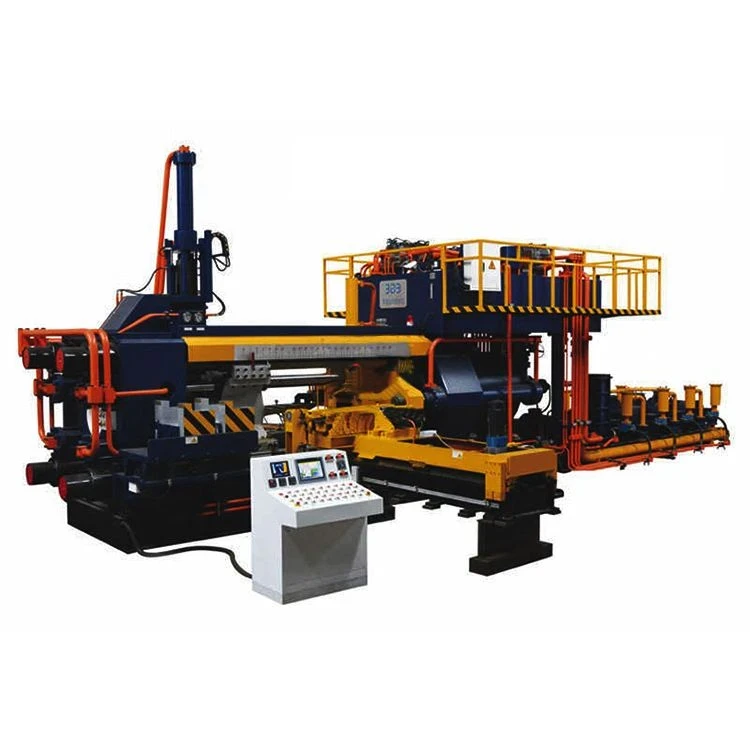
Screw Geometry Modification
Custom flight depth, compression ratio, and barrier sections designed for specific melt viscosities, ranging from high-molecular-weight polyolefins to rigid PVC powder.

Drive & Transmission Selection
Integration of heavy-duty industrial gearboxes based on specific torque density requirements (N*m/cm^3).
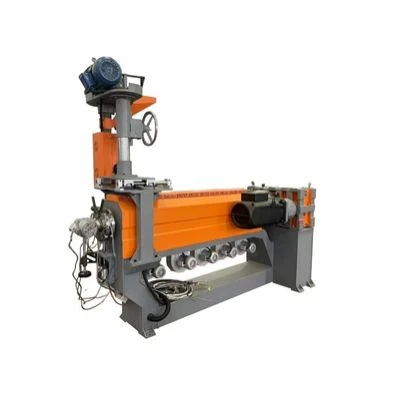
Feeding Systems
Gravimetric loss-in-weight single or twin-screw feeders and volumetric multi-component dosing units linked directly to the main extruder line control.

Interface Integration
Standard industrial communication protocols (Modbus TCP, Profinet, or OPC UA) for integration into existing plant supervisory control and data acquisition or manufacturing execution systems.
Applications
HDPE / PP Pipe Lines
High-speed continuous extrusion of pressure pipes, corrugated drainage pipes, and multi-layer conduit across various diameters.
WPC & Profile Extrusion
Processing wood-plastic composite blends and rigid PVC window and door profiles with specialized conical twin-screw configurations.
Sheet & Board Production
Extrusion of flat sheets including polypropylene, acrylonitrile butadiene styrene, and high-impact polystyrene for thermoforming and industrial partitioning.
Polymer Compounding & Recycling
Direct pelletizing lines integrating underwater pelletizers, strand pelletizers, and melt filtration screen changers for post-industrial and post-consumer scrap.
Frequently Asked Questions
We are one of the most professional extrusion machine manufacturers in China, featured by quality products and good low price. Please rest assured to buy discount extrusion machine made in China here and get quotation from our factory. Customized orders are welcome.
Double Cable Extrusion Machine, Fiber Optic Cable Extrusion Line, extrusion machine